


Joint Water Commission between India and Bangladesh
Syllabus: GS2/IR
Context
- The Ministry of External Affairs reiterated that India and Bangladesh have a “structured mechanism” to deal with the Ganga Water Treaty requirements.
About
- The bilateral Ganga Water Treaty is set to expire on December 12.
- The treaty was signed in 1996 between India and Bangladesh.
- The three-decade old agreement for river water sharing requires expert-level and political consultations for renewing the pact.
Water Treaty Mechanism
- India and Bangladesh share about 54 rivers, of which three — the Ganga, Brahmaputra, and Teesta — are major rivers that are vital to Bangladesh’s agriculture and flood-preparation mechanism.
- A Joint River Commission came into existence following the signing of a statute on November 24, 1972.
- The India-Bangladesh Joint River Commission is created by each partner country appointing a Chairman and three members who will hold office for a period of three years.
- The Commission’s meetings are held annually, in turn, in Bangladesh and India.
- Functions:
- Maintaining liaison between the two sides on important river-related issues to help obtain the maximum benefit from river waters on both sides.
- The commission is expected to maintain close coordination to address flood control requirements, cyclone warnings, and irrigation projects.
- The Commission may also be assigned tasks that the two governments may wish to entrust to it.
Source: TH
US Midterm Elections
Syllabus: GS2/IR
In News
- President Donald Trump has suffered a huge blow in the US midterm elections, with the Republican Party on track to lose control of the House of Representatives and possibly the Senate.
What are US Midterm Elections?
- They are held every four years, halfway through a President’s term.
- They serve as a referendum on the administration’s performance and policies.
- Although the President is not directly elected, all 435 seats in the House of Representatives, 35 Senate seats and several state governorships are contested.
- The elections are conducted through a decentralised system, with individual state and local authorities responsible for voting, ballot printing and counting.
- The results are also seen as a measure of how happy people in the US are with the president’s performance so far.

Source: TH
Sikkim’s Soreng Becomes India’s 1st Notified Organic Fisheries Cluster
Syllabus: GS3/Economy
Context
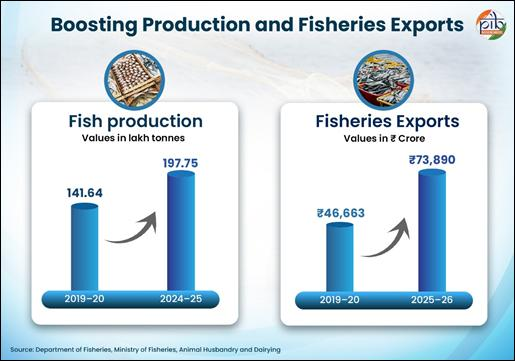
- Sikkim’s Soreng district has become India’s first notified Organic Fisheries Cluster under the Pradhan Mantri Matsya Sampada Yojana (PMMSY).
About
- This cluster has prioritised environmentally healthy and sustainable fish farming without using harmful chemicals, antibiotics and pesticides.
- This specifically emphasises Amur carp, Indian major carp species (IMC) and trout fish farming.
- Under its cluster-based approach, the government has notified 34 fisheries production and processing clusters across the country, including organic fisheries clusters in Sikkim and Meghalaya.
- The organic fisheries cluster focuses on an ecologically healthy fish farming system avoiding chemicals, antibiotics, and pesticides.
- This also ensures minimal environmental pollution and prevents damage to aquatic ecosystems, contributing to sustainable fish production practices.
Pradhan Mantri Matsya Sampada Yojana (PMMSY)
- It is the flagship scheme of the Department of Fisheries, Ministry of Fisheries, Animal Husbandry & Dairying, and was launched in 2020.
- Aim: To give momentum to the ‘sunrise’ fisheries sector through consolidated efforts from various schemes and initiatives.
- The PMMSY is an umbrella scheme with two separate components namely Central Sector Scheme (CS) and Centrally Sponsored Scheme (CSS).
- The Centrally Sponsored Scheme (CSS) Component is further segregated into Non-beneficiary oriented and beneficiary orientated subcomponents/activities:
- Enhancement of Production and Productivity
- Infrastructure and Post-harvest Management
- Fisheries Management and Regulatory Framework.
Source: TH
Protected Area Permit Rules
Syllabus: GS2/Governance
In News
- The Nagaland government has urged the Centre to completely withdraw the Protected Area Permit (PAP) scheme from the state ahead of the state’s flagship Hornbill Festival.
Protected Area Permit (PAP) regime
- It is issued by the Government of India and is an official document that a foreign national is required to carry while visiting states along India’s international borders in areas designated centrally as protected or restricted.
- It was initially imposed under the Foreigners (Protected Areas) Order, 1958.
- Coverage: Foreigners require a PAP to visit Arunachal Pradesh, Manipur, Mizoram, Nagaland, Sikkim, Andaman and Nicobar Island and certain parts of Himachal Pradesh, Jammu and Kashmir, Rajasthan and Uttarakhand.
- It was relaxed for Manipur, Mizoram and Nagaland in 2011.
- However, it was reimposed in December 2024, citing security reasons.
- It was relaxed for Manipur, Mizoram and Nagaland in 2011.
Source: IE
Saffron Cultivation in Ladakh
Syllabus: GS3/Agriculture
Context
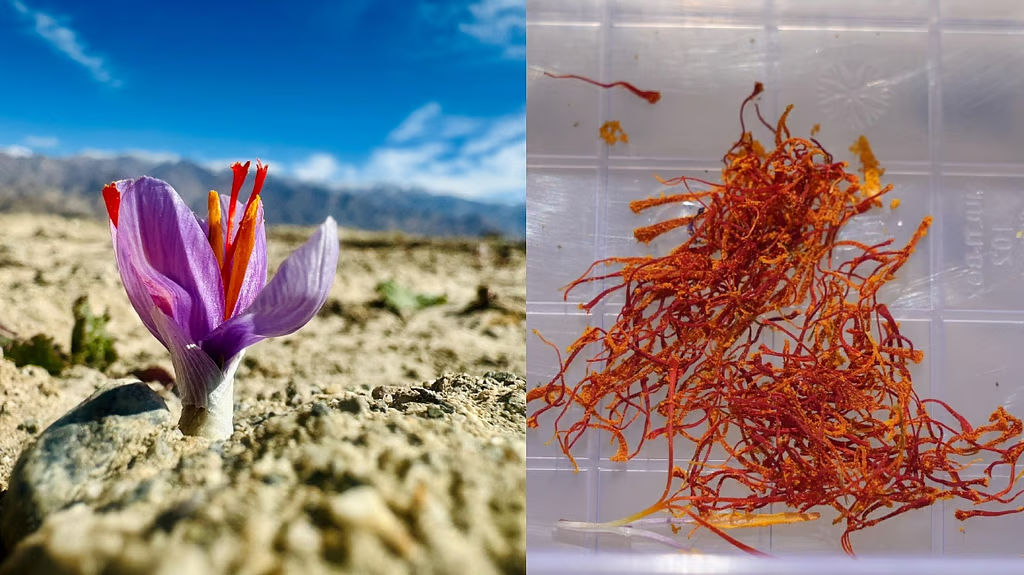
- A pilot project in Ladakh has recorded its first saffron flowering within 30 days of plantation, earlier than the usual flowering period of around two months.
About Saffron
- Saffron (Crocus sativus) is a spice obtained from the dried red stigmas of the saffron flower.
- It is commonly known as the world’s most expensive spice because of its labour-intensive harvesting, limited production and high market value.
- It is used as a spice, natural colouring agent, in traditional medicine and in the cosmetics industry.
- Growing conditions: Saffron generally requires:
- A temperate climate with cold winters and warm, dry summers.
- Well-drained, fertile soil to prevent corm rot.
- Adequate sunlight and relatively dry conditions during flowering and harvesting.
- Propagation: It is cultivated through underground corms (bulb-like storage structures), rather than conventional seeds.
Saffron Cultivation in India
- Major producing region: Jammu and Kashmir is India’s principal saffron-producing region, particularly:
- Pampore (Pulwama district), known as the Saffron Bowl of Kashmir.
- Budgam, Srinagar and Kishtwar districts.
- Global position: Iran is the world’s largest saffron producer, while India is a relatively small producer.
- GI Tag: Kashmiri Saffron received the Geographical Indication (GI) tag in 2020.
Source: DTE
1st International Maize Conference 2026
Syllabus: GS3/ Agriculture
Context
- The 1st International Maize Conference 2026 was held in Hyderabad.
About
- India aims to increase maize production from approximately 55 million tonnes to 75 million tonnes over the next decade.
- This target will be supported by improved crop productivity, innovative breeding technologies, stronger seed systems and farmer-centric research.
- Theme: Maize Revolution for Food, Feed, Fodder, Fuel and Sustainability in the Changing World (M4FS).
About Maize
- Maize, commonly known as corn, is a cereal crop belonging to the grass family, Poaceae.
- Origin: Central America (particularly Mexico).
- Largest producer: The United States is the top producer globally, leading the market with 430.9 million metric tonnes.
- India’s rank: 5th among individual countries, with approximately 55.09 million tonnes of production.
Geographical Conditions for Maize Cultivation
- Soil: Maize grows well in well-drained, fertile, sandy loam to silty loam soils. Alluvial soils are particularly suitable for maize cultivation.
- The ideal pH for maize is between 5.5 and 7.5.
- Drainage: Waterlogging can be harmful to maize, so good drainage is essential.
- Temperature: Maize is a warm-weather crop that prefers temperatures between 21°C and 32°C.
- Precipitation: Requires 50–100 cm of well-distributed rainfall.
- Season: In India, maize is typically grown during the Kharif season (June-September).
- However, it can also be sown in other seasons depending on the region and specific variety.
- Major producing states: Karnataka, Madhya Pradesh, Maharashtra, Bihar and Telangana.
Source: PIB
Exercise Tiger Triumph 2026
Syllabus: GS3/Defence
Context
- The opening ceremony of the Exercise Tiger Triumph 2026 was held at the Maritime Warfare Centre (MWC), Visakhapatnam.
About
- Launched in 2019, Tiger Triumph is a bilateral India-US Tri-Service Humanitarian Assistance and Disaster Relief (HADR) exercise.
- The 2026 edition is being conducted as a Tabletop Exercise (TTX), focusing on joint planning, coordination and interoperability between the Armed Forces of both countries during large-scale HADR operations.
- For the first time, a team from the National Disaster Response Force (NDRF) is participating in the exercise.
Source: PIB
Previous article
Pumped Storage Hydropower
Next article
News In Brief 04-11-2026
